The Toys We Grew Up With — And the Children Who Never Had Any
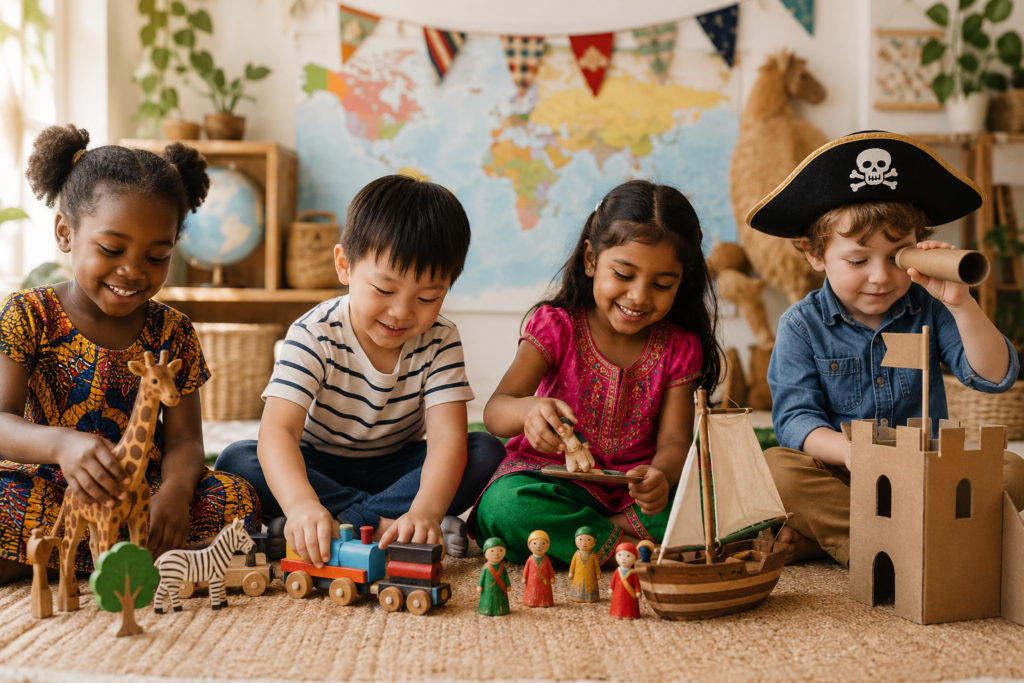
There’s something almost magical about the way a child can turn a simple toy into an entire universe.
A toy car becomes a race against time on an imaginary track. A doll becomes a best friend with a name, a personality, and a whole life story. An action figure becomes the hero of an epic battle that only the child holding it can fully see. We didn’t need instructions for any of it. The imagination just took over, and that’s exactly the point.
Most of us who grew up with toys probably don’t think much about what they gave us. We were too busy playing. But looking back, those small plastic and plush objects were doing something profound. They were teaching us to create, to problem-solve, to empathize, to dream. They gave us a language for processing the world around us before we had the words to describe it.
That experience, so ordinary to so many of us, is completely out of reach for hundreds of millions of children around the world.
Here’s something startling: there is no publicly available statistic on how many children have no toys. The world has tracked child hunger, child mortality, and access to clean water for decades because these are the statistics that make headlines worldwide, and rightly so. But toys? They’ve been quietly filed away as a luxury, something that comes after survival is secured, something the world hasn’t considered worth counting.
I’m not saying toys are going to save lives or solve childhood hunger. Kids in these situations have needs that go far beyond what a well-trained imagination can handle. But here’s the question I keep coming back to: once we get kids to a healthy place, why not also allow their minds to flourish? Why not let them dream?
Because childhood doesn’t wait for perfect conditions. Development doesn’t pause. A child growing up in extreme poverty, surviving on less than $3 a day, as over 400 million children do globally, isn’t just missing out on a plaything. They’re missing out on the building blocks of imagination, creativity, and joy that the rest of us took for granted.
At Uganda Play Project, we believe toys are not a luxury. They are part of what it means to have a childhood. And I’ve witnessed this firsthand.
On my first trip to a school in Uganda, the kids were fascinated by my watch. They couldn’t stop playing with the settings. I think it took me a full week after I got home to get it back to where it was. It was such a small thing to me, but to them it was extraordinary. That moment planted a seed.
Fast forward to December 2025, when we decided to bring 3D-printed toys on our next trip. We chose the infinity cube, a print so common back home that I barely gave it a second thought. Honestly, I figured it was old news. It had been printed by so many people and was so widely available in my neighborhood that I had completely lost sight of what it might mean to a child who had never seen anything like it.
The day we handed them out, the kids were electric with excitement. Many of them had never held anything like it. And that’s when it hit me, none of the kids at the school had any toys at all. Not one. I found myself asking, how could this be? Then the answer came: when food and security are the focus, toys have to wait.
These toys we’re printing are not going to save any lives. They’re not going to keep kids fed when they’re hungry. But my hope is that every child who receives one will have the chance to use their imagination — to start a zoo where all the animals talk to each other, or race a toy down the dirt path outside the dorm. And beyond the play, these toys carry something else: the message and love of Jesus. They are a tangible reminder that there are people in America who know them, love them, and care about their well-being as whole people.
Uganda Play Project is printing one toy at a time, hoping to bring smiles to kids across the world. Luke 18:16 tells us that the Kingdom of God belongs to the children, not because of their age, but because of their wonder and imagination. As we get older, we tend to see the world in black and white. But kids, no matter where they live, can still see the miracles all around them. And that imagination? It can lead them straight to the love of God.